The contemporary enterprise operating environment is characterized by compounding technological acceleration, expanding cyber-kinetic threat vectors, and shifting B2B buyer psychologies.
For high-revenue UK enterprises, the traditional digital perimeter has dissolved. Digital assets can no longer be conceptualized as static, isolated brochures managed by commoditized web design agencies; they are deeply interconnected revenue engines, serving as the primary interfaces for complex buying committees and representing the most critical attack surfaces within the organizational architecture.
The era of reliance on manual sales interactions has permanently closed, with modern B2B buyers completing approximately 67% of their research and evaluation online before ever initiating contact with a sales representative. It is time to structurally abandon the fragmented, reactive “break-fix” IT model and pivot to a holistic Digital Infrastructure Partnership.
The Catastrophic Calculus of Digital Downtime
The assumption that digital infrastructure requires financial investment only at the point of failure is a dangerous relic of a bygone technological era. In 2026, website downtime is not merely a technical inconvenience; it is a measurable financial hemorrhage.
When a single node within an enterprise’s highly connected matrix fails, business operations halt instantly.
- The £9,000/Minute Hemorrhage: For high-revenue UK enterprises, the average baseline cost of IT downtime currently rests at approximately £9,000 per minute.
- Productivity Paralysis: When internal systems fail, workforce output drops to absolute zero. The unrecoverable capital destruction can be calculated mathematically: ProductivityLoss=Employees x ImpactPercentage x AverageHourlyWage x DowntimeHours.
- Brand Authority Decay: In the modern economy, technological reliability is synonymous with brand competence. If a platform is unavailable, 88% of online consumers report they are less likely to return to the brand.
Despite these catastrophic financial implications, a staggering 92% of UK businesses still take 24 hours or longer to recover from a significant network outage. This delay is the direct, systemic symptom of relying on reactive IT infrastructure.
The Terminal Vulnerability of Reactive ‘Break-Fix’ IT
For decades, organizations treated IT as a reactive support function, deploying technicians only when hardware failed or networks collapsed. This “break-fix” model creates a perverse incentive structure where IT providers profit directly from system instability and client downtime.
The threat landscape is now dominated by AI-accelerated attack vectors and complex SaaS supply chain compromises. Reactive IT support is fundamentally incapable of defending against these high-velocity threats because it operates strictly in the aftermath of an intrusion. By the time a break-fix technician is notified of an anomaly, the network has already been encrypted, and the extortion demands issued.
Furthermore, standard web design agencies abandon digital assets post-launch, leaving them to degrade into technical debt. They fail to implement continuous, data-driven User Experience (UX) optimization, ignoring the fact that every $1 invested in strategic UX design yields an average return of $100—a mathematically proven 9,900% ROI.
The Strategic Solution: Proactive Managed Care as ‘Business Insurance’
High-revenue UK enterprises must partner with entities that conceptualize, build, and defend digital assets as mission-critical infrastructure.
Daryo89 Ltd has evolved into a Growth Consultancy. We do not provide “IT Support.” We provide Digital Infrastructure Management.
Within the Daryo89 architectural framework, ongoing Managed Care packages must be conceptually reframed by enterprise leadership. They are not an IT expense; they are a highly sophisticated form of proactive revenue protection and operational Business Insurance.
Utilizing 24/7 proactive monitoring, the Daryo89 model anticipates and neutralizes potential system errors, API anomalies, and security vulnerabilities before they can manifest as operational downtime. This proactive stance replaces chaotic firefighting with strategic foresight.
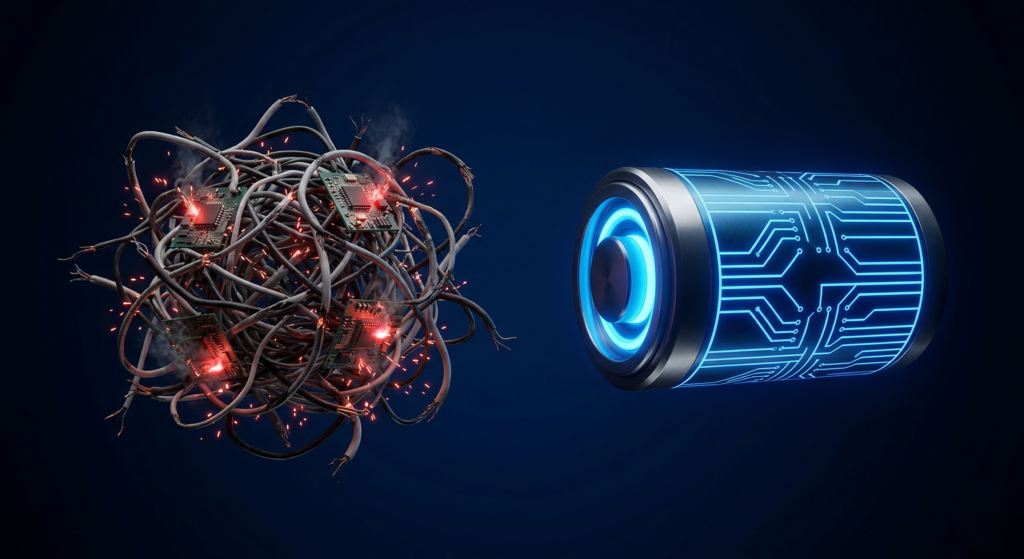
Comparative Architectural Assessment
| Capability / Metric | Daryo89 Growth Consultancy (Proactive) | Standard Web Agency / Break-Fix IT (Reactive) |
| Asset Philosophy | Views digital assets as dynamic, high-velocity revenue engines requiring continuous optimization. | Views websites as static digital brochures; views IT strictly as hardware repair. |
| Issue Resolution | Anticipates and neutralizes 85% of anomalies prior to client awareness via 24/7 telemetry. | Responds exclusively after a critical failure has halted business operations and interrupted revenue streams. |
| Cost Structure | Predictable, flat-fee operational expenditure (OpEx). Functions as continuous, budgetable Business Insurance. | Volatile capital spikes characterized by exorbitant emergency call-out fees and after-hours premium rates. |
| Downtime Impact | Minimizes or eliminates the £9,000/minute enterprise downtime cost through high-availability architecture. | Guarantees prolonged operational outages, resulting in massive revenue hemorrhage and productivity paralysis. |
| UX & Revenue | Drives measurable top-line growth by removing digital friction and accelerating B2B pipeline velocity. | Suffers from “design latency”; actively loses revenue by ignoring user abandonment caused by degraded interfaces. |
Stop treating your digital presence as an administrative afterthought. Secure your revenue engine.
Strategic Solutions. Personal Partnership.